
Below please find an Important Federal Regulatory Update from ACEC-NH
SBA Proposes Massive Changes to Small Business Size Standards
Last Thursday, the U.S. Small Business Administration (SBA) published a proposed rule in the Federal Register making significant changes to small business size standards across many industries, including engineering. From time to time, SBA reviews and proposes changes to its size standards and those changes are typically incremental and to adjust for inflation. These most recently proposed changes are massive and will dramatically reshape how small businesses are defined for federal contracts if finalized.
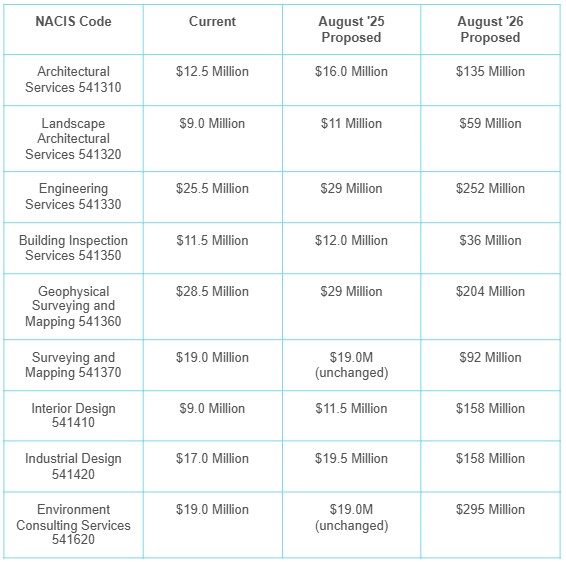
In August 2025, the SBA had proposed modest revisions to the small business size standard for engineering as part of the periodic 5-year update. We were expecting a final rule soon to finalize the size standards adjustments to begin in FY 2027. The proposed rule released on Thursday replaces the August 2025 proposed rule as well as contains a revised size standards methodology. Specifically, SBA is proposing to define a small business engineering firm as a firm with less than $252 million in average annual receipts over five years. The current threshold is $25.5 million – an increase of nearly ten times the current level.
The following table details the current and proposed size standards (in millions of dollars of average annual receipts over 5 years) for specific ACEC member common NAICS codes:
Member companies can read the proposed rule and related information:
91 FR 54096, Notice for Comments: Small Business Size Standards: Revised Size Standards
91 FR 53741, Proposed Rule: Small Business Size Standards
Comments are due on September 21, 2026.
ACEC-National has already been in touch with the House Small Business Committee about the proposed rule and is seeking additional clarity and information on the proposed rule’s intent.
ACEC National has scheduled a virtual meeting with Ryan Lambert, Associate Administrator, Office of Government Contracting and Business Development, U.S. Small Business Administration at 3:30pm ET on September 9, 2026. ACEC Members can register here. Size standard adjustments along with the status of small business policies government-wide is planned for the discussion. The meeting is open to all ACEC members.
ACEC National is pulling together a working group of small, medium, and large firms to help review SBA’s proposal and develop comments. ACEC Members with expertise in federal government contracting should contact Jess Eskeland if you would like to be a part of this Size Standard Task Force. The Task Force will have a few meetings over the next month.
Additional information will be provided as it becomes available. In the interim, please let me know if you have any questions.